
War is for the birds.
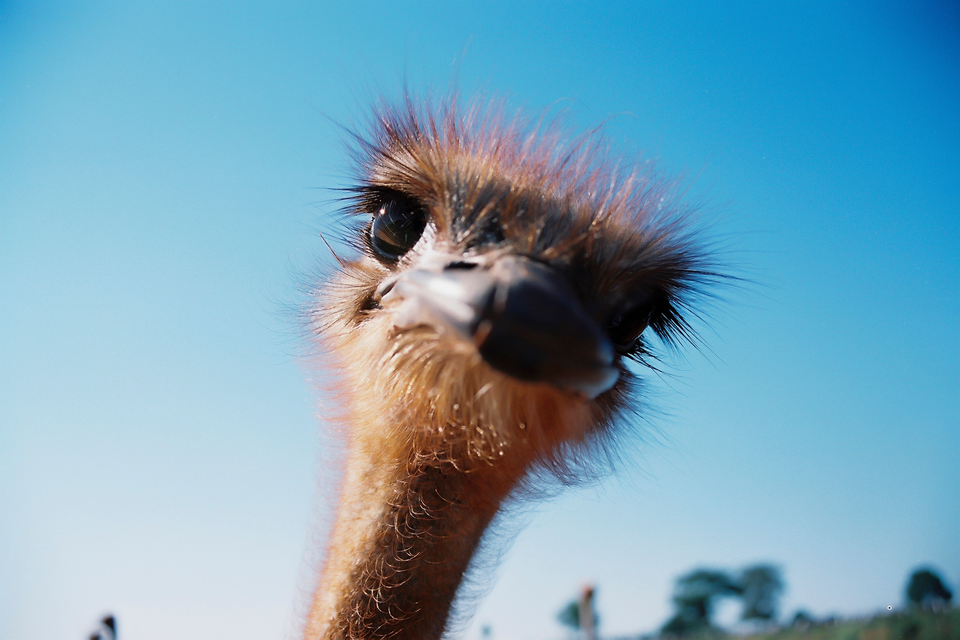
In 1932, Australia declared war on a bird, and the bird won.
Sit with that sentence for a second, because I'm not being cute with it, though I do enjoy word-smithing. Australia declared war on a bird, and the bird won.
I don't mean Australia "lost a metaphorical battle with nature." I don't mean Australia "struggled with a pest problem."
I mean an actual branch of the actual Australian military, acting on actual government orders, deployed actual machine guns against a population of actual birds and, by the time it was all over, the birds had, by any reasonable measure, won the war.
Following World War I, returning Australian veterans who'd survived four years of trench warfare were handed remote, scrubby parcels of Wheatbelt land and told, essentially, go be farmers now, thanks for your service. Then the Great Depression hit, wheat prices collapsed, a drought ensued, and promised government subsidies never arrived.
By October 1932, a few thousand broke ex-soldiers were openly threatening to withhold their harvest entirely.
And then twenty thousand emus showed up.
Really. Twenty thousand six-foot-tall, flightless, famously wackadoodle birds, migrating inland-to-coast on their usual seasonal route... which now happened to run straight through freshly-cleared, wheat-sprouting farmland, and conveniently populated by the farmers' watering troughs.
From an emu's perspective, it was an all-you-can-eat buffet. From the farmers' perspective, it was a plague. The farmers, being veterans, did what veterans do when a threat shows up: they asked for machine guns.
A delegation went to see the Minister of Defence, Sir George Pearce, requesting Lewis guns, the same weapons they'd used against humans a decade earlier in France, to be deployed against their flightless foe.
This wouldn't have found a place here on Absurdia had Pearce actually said no to the request, and of course he didn't, praise be. He said yes, practically immediately, noting the birds would make "good target practice." He even arranged for a Fox Movietone cameraman to document it, presumably because someone had already correctly guessed this would be either a triumphant newsreel or the funniest home video ever filmed.
It was the second one.
Command went to Major G.P.W. Meredith of the Royal Australian Artillery, who arrived with two Lewis guns, ten thousand rounds of ammunition, and real soldiers with actual orders to fight real birds. Rain delayed things, but by November 2nd, the guns were dry and pointed at roughly fifty emus near Campion.
The farmers were to herd the emus into a kill zone, and the machine guns would do the rest. Very tidy. Very military.
The emus had a different plan.
The first burst of gunfire missed everything (the emus were out of range), but caused them to split into dozens of unpredictable splinter groups and run in every direction, all at once, which feels like a very emu-like thing to do to me. Who could have guessed?
Two days later, Meredith set up an ambush near a dam where more than a thousand emus had converged, numbers that should make any commander feel briefly, gloriously optimistic. The gunners waited until the birds closed in, then opened fire.
The gun jammed after just twelve confirmed kills.
Twelve. Out of a thousand. The rest scattered into the scrub, gone for the day, and the operation's single best tactical opportunity evaporated because of a mechanical hiccup, something extremely on-brand for 1930s ordnance, or extremely on-brand for the universe's sense of humor. Both can be true.
Things did not improve. Next, Meredith mounted a Lewis gun on a truck, presumably hoping to run the emus down like some scene from a Mad Max movie, still fifty years into the future.
It didn't work. Emus can hit 30 miles an hour when running across open country; 1932 trucks could not. The ride was so rough the gunner never got off a shot.
By day four, army observers reported individual flocks appeared to be posting lookouts. You read that right. A large, black-plumed bird standing sentry while the rest fed, watching for soldiers and warning the group in time to scatter when the Lewis gun threat was spotted.
Somewhere in this fight, the emus developed better intel and reconnaissance than the Australian Army.
By November 8th, six days in, the military had fired 2,500 rounds. Kill estimates range from 50 to 500, depending on who's reporting and how competent they needed to look in front of superiors. Meredith's official report is a masterpiece of dry understatement, noting his men suffered no casualties whatsoever, "except to their dignity."
Word reached Parliament. Members of the House of Representatives started asking pointed questions about why the Army was losing a shooting war to giant poultry, and the press ran gleeful, mocking headlines. Pearce, tired of being a punchline, pulled the troops.
That would be a perfectly good, embarrassing ending to the story except the emus, unaware they'd won a symbolic victory, kept eating the crops. The drought worsened, more birds poured in from the interior, and farmers kept begging for help. So four days after retreating in defeat, the government marched right back in for round two.
It went marginally better for the diggers, in the sense that "marginally better than an unmitigated disaster" is a real category. Over the following month, kills crept up to roughly a hundred per week. When Meredith was recalled on December 10th, he claimed 986 confirmed kills using 9,860 rounds, a suspiciously tidy number per bird.
Even with generous math, Australia burned through roughly ten thousand rounds of military ammunition to place a single hail dent in the total population of twenty thousand, and three years later newspapers were still publishing articles wondering if the whole campaign had accomplished anything.
It hadn't, really. Farmers asked for the Army again in 1934, 1943, and 1948. Every time, the answer was no.
In London, conservationists caught wind and started worrying Australia was trying to exterminate the emu, a species that had survived multiple ice ages and would comfortably outlast the British Empire's opinion of it. Meanwhile Major Meredith, reflecting afterward with something like grudging respect, compared the emus to Zulu warriors, noting they could "face machine guns with the invulnerability of tanks."
A man who had personally commanded humans in vicious battles said that. About birds.
What finally worked wasn't soldiers or machine guns, it was fences. The boring, unglamorous, actually-effective solution nobody wanted a newsreel about.
That's the whole story. A nation with an actual, decorated military looked at a bird best known today for losing footraces to nobody, and fought a war it simply could not win. Not because the emus were smart. They're not. They just ran in random directions really, really fast, and proved that's a functionally perfect counter to 1930s machine-gun doctrine.
Ninety-plus years later, the emu still stands on Australia's coat of arms, right next to the kangaroo, forever commemorating the one time the country picked a fight with a large flightless bird. And lost. Had there been an armistice?
You cannot make peace with an animal that doesn't know a war happened.

Member discussion