
Judas' two lips.

You might have noticed Artificial Intelligence is pretty frothy at the moment. You may hold some Very Strong Opinions on the topic. Or on data centers. Or on their water use. Or... billionaires.
You might even hold some ideas on the insane, positively Anthropocene flood of capital that's gone flowing into the A.I. rabbit den, flushing out game, and with even higher, over-the-bank levels to come once these burgeoning colossi begin trading publicly on Wall Street. Ah, capitalism.
It feels way too easy for Absurdia.
(Imagine you can hear me scoff or chortle here. Maybe even snort. It helps.)
But I guess we're going to do it. Again.
We all know we've done this dance before, what with the irrational exuberance, the weird ecosystems that spring up to drink from its weird fountains, the spectacular collapse that eventually washes it all away (or at least takes it down a peg) maybe to get rebuilt, or maybe not. We had the 2008 financial crisis, of course. That was fun. I still have a bit of a hangover from that one.
And the Dutch Tulip Mania, writ large, comes to mind, sure, but that's a well-worn chestnut by now, so if I really wanted to drive that story home, from the 1600s delivered to the day traders of today, and to you, the 401(k)-holders hoping to hitch a ride on to the next galloping horse, I'd have to get my hands dirty.
Dig up some bulbs.
Meet Jan van Goyen, successful painter, unsuccessful everything else. He painted landscapes for a living, and speculated in houses, land, and others' art, all for a hobby that kept trying to kill him, financially. In January 1637, at what history would very generously call "not an especially promising moment," he decided the one thing his investments portfolio needed was tulips.
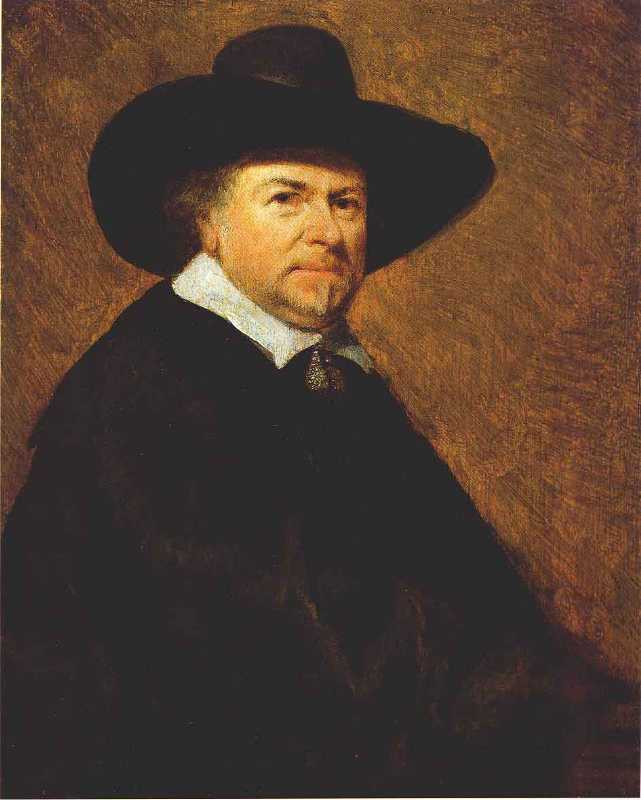
On January 27th, Van Goyen bought ten bulbs from Allart Claesz van Ravesteyn, a former burgomaster of The Hague, because nothing says sound investment quite like buying bulbs from a guy whose last job was literally running a city. That, good sir, is what is called cachet.
A week later, Van Goyen came back for forty-odd more, plus a little extra sold by weight. Total damage? Around 900 Dutch Guilders, an enormous sum. The seventeenth-century Dutch equivalent of maxing out your credit cards to buy a timeshare in Vail.
But having an artistic trade, Van Goyen didn't pay for the tulips all in cash. Part of the deal included a landscape by Salomon van Ruysdael (a contemporary of Van Goyen, in whose art he speculated), and one of Van Goyen's own paintings of Judas, thrown in .
Judas? Yes. That Judas. The betrayal guy. My Vacation Bible School days sometimes slip my mind (age, you know), but I remember that one.
It was, in every respect, a perfectly respectable seventeenth-century Dutch mercantilist financial instrument: swap Golden Age paintings for tulip bulbs at the absolute zenith of Tulip Mania, sit back, collect profits. Bada bing, bada boom.
There was only the one small problem.
The market was already collapsing.
Not "would collapse eventually," not "showed early warning signs." Van Goyen made his second purchase, the big one, on February the 4th, 1637, which historians now recognize as the actual day the market's machinery flew apart.
For months, tulip bulbs had traded hands again and again at ever-climbing prices, changing and flipping owners like a game of hot potato where nobody involved had actually seen the potato, or even cared to (though legend, or likely myth, has it one costly bulb was mistaken for an onion and eaten).
The whole scheme ran on one, high-octane fuel source: the next guy showing up, wallet open, still believing. On the 3rd of the month, the next guy came strolling in at a slower pace than usual. Low-energy like. On the 4th, he stopped showing up altogether.
Van Goyen had somehow managed to time his market entry to coincide, almost to the hour, with the floor giving out beneath the whole shebang. By summer, when the bulbs finally arrived (because yes, someone still had to deliver actual flowers to this man) their value had cratered. Bigly. The profit he'd been counting on to pay for the dreamt-of, profit-generating flowers had evaporated before the flowers themselves had finished blooming.
But the debt hadn't. Debt, it turns out, is considerably hardier than tulips.
Van Ravesteyn, the ex-burgomaster-seller, and a man who presumably knew a thing or two about how contracts work, did not regard "the entire market has collapsed" as grounds for renegotiation. Sure, the tulips were now worth a fraction of their earlier sticker price. Unfortunate! But a deal is a deal, and this deal had been signed, sealed, and... one-third delivered.
Because he'd gotten the Judas.
Van Goyen had the bulbs. He had none of the profit. He still owed the money.
But he'd handed over the Judas to Van Ravesteyn.
Fast forward to 1641. Van Ravesteyn is dead. His estate inventory (inventories which are, frankly, one of this particular period of history's great comic subgenres) lists Van Goyen's outstanding obligations with crisp Dutchness: a debt of ƒ843 under one tulip contract, another ƒ54 under a related one, and, sitting there in the ledger, words silently unspoken, was the inked-in entry of the painting Judas, valued at ƒ36, delivered.
There's something almost too perfect about that inventory. The tulips, gone. The speculative windfall, gone. The seller, dead. An entire market that once valued a single tulip bulb more than that of a house, gone, gone, gone, gone.
And yet. Sitting patiently in a ledger, undisturbed, waiting: the debt. Isn't that always the way of it?
The flower vanished. The obligation stayed put, like it had nowhere better to be. And the Judas, the one sliver of the original bargain that actually, physically changed hands for the worthless bulbs, became the strangest surviving witness to the entire fiasco. A painting of the original betrayer, quietly present at the scene of a much smaller, much-repeated betrayal: a betrayal by a system humans had built.
You'd think Van Goyen might take a hint here. Tulips: bad idea. Maybe try something safer.
He tried real estate. It did not go better.
He spent the following decades buying and building property, sliding in and out of financial trouble, and selling off paintings and possessions to plug the leaks, right up until he died in 1656. His estate was so insolvent his widow had to hand it over for inventory, too.
It'd be tidy to say Tulip Mania ruined Jan van Goyen. It'd also be wrong, or at least too neat. The man contained multitudes, like all of us, and most of them were financially unwise. Jan van Goyen is the humanity.
But this part we can pin down, and it's absurd enough to stand on its own: the object was a flower. The price was an abstraction built on sandcastles of other abstractions. The anticipated profit disappeared into thin seventeenth-century air.
The contract though? It did not.
And somehow, when the dust settled and the bulbs had rotted and the market had become a cautionary tale taught to bored economics undergrads for the next four centuries, the only part of the whole transaction that had actually, physically been delivered and survived was a painting of the man who sold out his friend for silver.
But surely that doesn't have anything in common with today.

(*) as absurd as it seems, absolutely no financial advice is implied in this article.
Member discussion